The MI Brightfields Pilot is awarding $10 million in grants for projects that create or store renewable energy, an article published by the Michigan Department of Environment, Great Lakes, and Energy says.
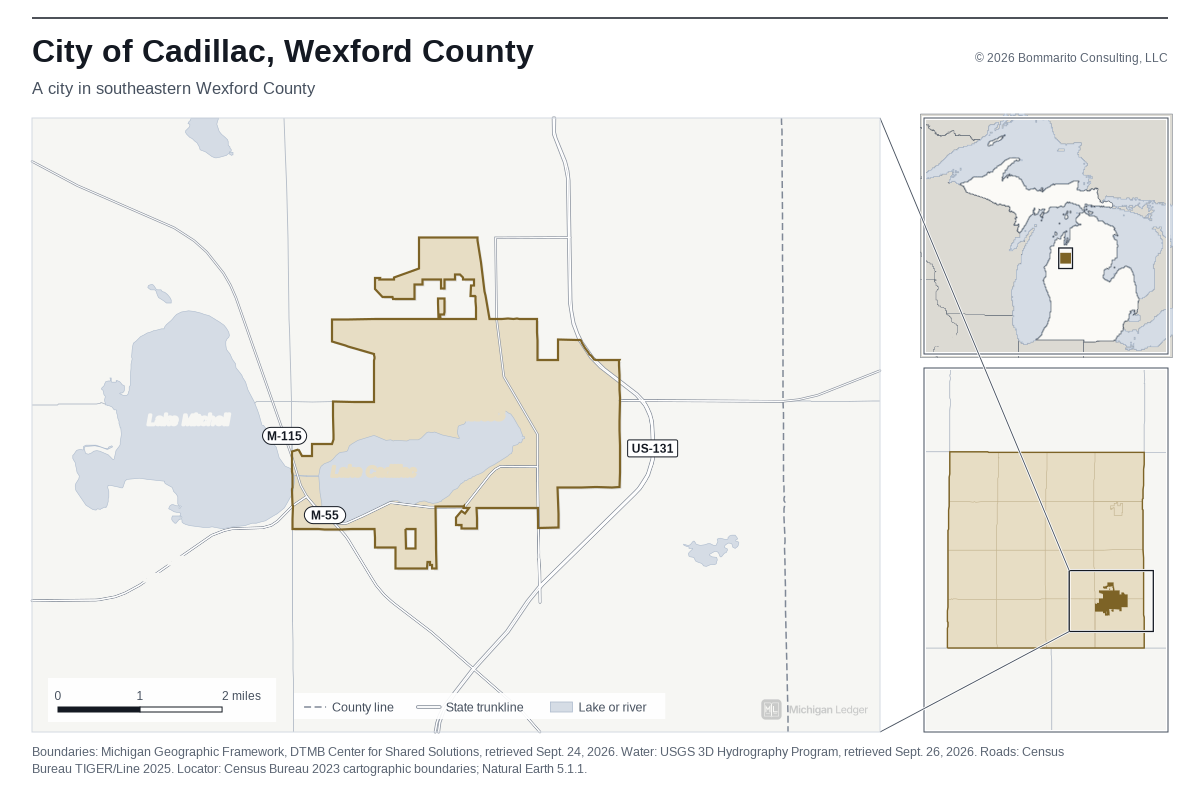
Map sources
Boundaries: Michigan Geographic Framework, DTMB Center for Shared Solutions, retrieved Sept. 24, 2026. Water: USGS 3D Hydrography Program, retrieved Sept. 26, 2026. Roads: Census Bureau TIGER/Line 2025. Locator: Census Bureau 2023 cartographic boundaries; Natural Earth 5.1.1.
The Nov. 25 article, EGLE’s brownfield program launches new kind of redevelopment: renewable energy, says the pilot prioritizes projects in low-income and disadvantaged communities. It also prioritizes projects that provide additional community benefits beyond clean energy generation and environmental cleanup.
The article says the department’s brownfield program has turned contaminated sites around Michigan into homes, jobs, businesses, and recreation areas and is looking to jump-start renewable energy redevelopment. It points to the Cadillac Solar Garden in northern Michigan as an example of the kind of project the pilot is designed to support.
The department worked with the city of Cadillac and Consumers Energy on a brownfield incentives package for the solar garden, the article says. The project has 1,752 solar panels on 2.77 acres, generating enough electricity to power 100 homes.
A case study by Genevieve Sertic of the University of Michigan says the solar installation is in Cadillac on the site of an old Mitchell Bentley plant that burned down in 2013. The Brownfield Developments case study says the 5-acre project is on a 20-acre former industrial site that required remediation of rubble, lead, and asbestos.
Consumers Energy developed the site in coordination with the Cadillac City Council, the case study says. Brian Warner, an environmental manager at local energy supplier Wolverine Power, initiated the collaboration between the city and Consumers Energy.
The case study says Cadillac received a $700,000 brownfield grant and a $300,000 brownfield loan to fund the redevelopment. The city used the funding to clear remaining buildings and remove debris and contaminated soil, and will pay off the loan through property tax revenue from future site usage.
The case study lists community residents, local businesses, and the city among the energy’s end users, including 65% of municipal facilities. It says any Consumers Energy customer will be able to purchase power from the array for a small added cost.